
Most buyers think a second property always means 20% down. They’re wrong. The 2nd home down payment requirement in Canada can start lower for a true owner-occupied second home, but rental use, price, unit count, and lender rules can push you back to 20% or more. Rules change, verify current lender and insurer requirements before you sign.
Quick answer: what is the 2nd home down payment requirement in Canada?
Yes, you need a down payment for your second house, and the minimum is not one universal number. A true owner-occupied second home may start around 5% in some Canadian scenarios, while a non-owner-occupied rental property commonly starts at 20% or more . The number moves with occupancy, purchase price, the number of units, and whether the loan fits current insurer and lender rules.
Yes, Ontario buyers also need cash beyond the down payment. I tell clients to budget roughly 1.5% to 4% of the purchase price for closing costs, depending on land transfer tax, Toronto location, title insurance, lender requirements, and adjustments . That is where buyers get caught short on closing day.
Second home vs investment property: why the label matters
No, a second home and an investment property are not the same thing in Canada. A second home usually means you or an eligible family member will actually occupy the property, while an investment property is bought mainly to earn rent or hold for profit. That label drives down payment, mortgage insurance, and underwriting.
Yes, lenders care about occupancy because it changes risk. If you say the property is a second home but the real plan is long-term rental, that can create a misrepresentation problem with the lender. I have seen deals unravel late when the financing application and the actual use did not match.
Yes, a simple decision tree helps. If you or close family will live there, start in the owner-occupied lane. If it will be rented long term, start in the rental lane. If it is a cottage or vacation home, the lender will still ask whether it is seasonal, year-round, and actually for personal use. If it has 2 to 4 units, the lender will also ask whether one unit will be owner-occupied .
Minimum down payment by use case
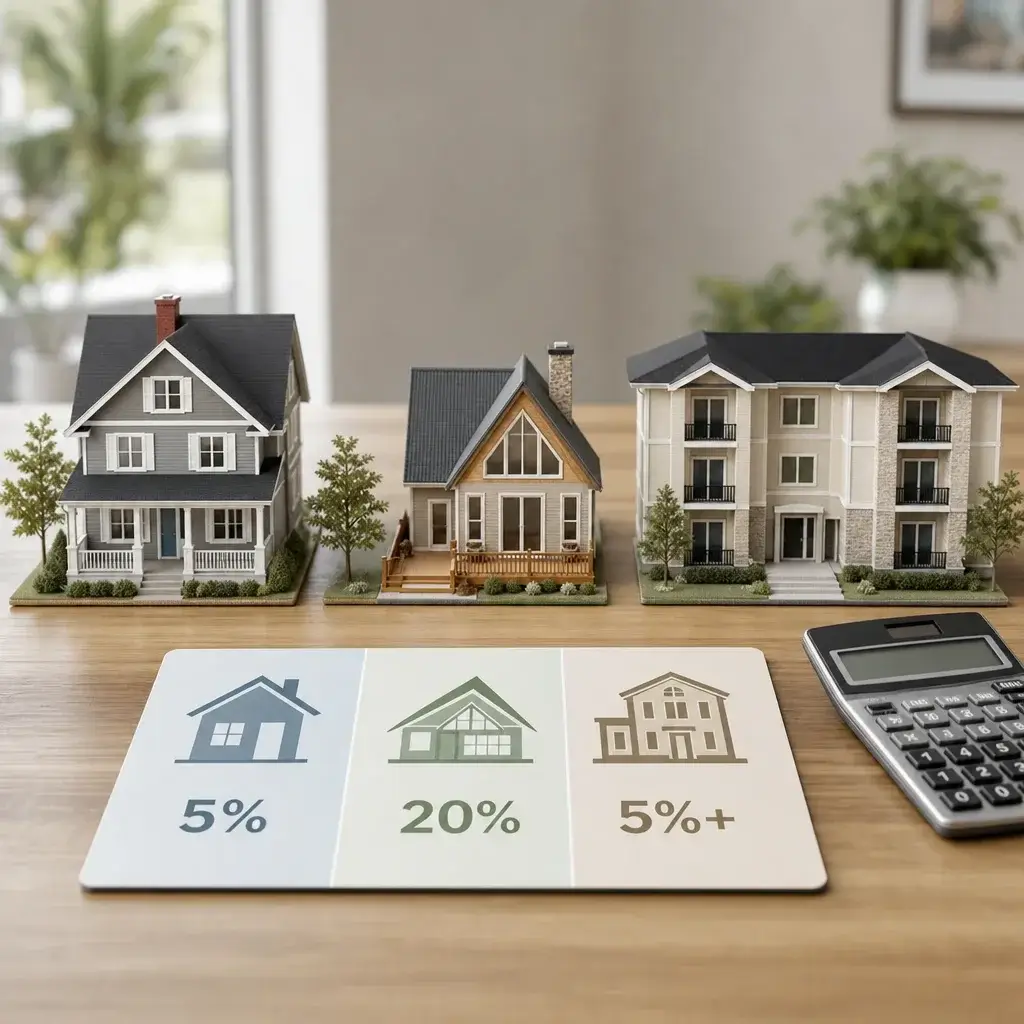
Yes, the minimum down payment for second home Canada rules usually split by use case before anything else. For a true owner-occupied second home, 5% may be possible in some files within current insured-lending price bands . For a non-owner-occupied rental property, 20% is a common floor .
Yes, vacation property and cottage files can fall into the owner-occupied bucket, but not automatically. Lenders look at year-round road access, heat, water, septic, and resale marketability. A cottage that works as a normal dwelling is easier to finance than a three-season cabin with access issues.
Yes, small multi-unit properties are different again. A duplex, triplex, or fourplex may be underwritten as owner-occupied with rental income if you will live in one unit, or as a rental property if you will not. Five or more units usually move into commercial lending, where down payments often land around 20% to 35% .
| Use case | Possible minimum | Common reality |
|---|---|---|
| Owner-occupied second home | 5% in some insured scenarios | Higher if price or lender rules push it there |
| Vacation home / cottage for personal use | 5% in some eligible files | Often stricter if seasonal or hard to finance |
| Non-owner-occupied rental | 20% | 20% or more depending on lender |
| 2-4 unit owner-occupied property | Varies by occupancy and rental income treatment | Often higher scrutiny on ratios |
| 5+ unit residential building | 20% to 35% | Usually commercial financing |
How purchase price changes your minimum down payment
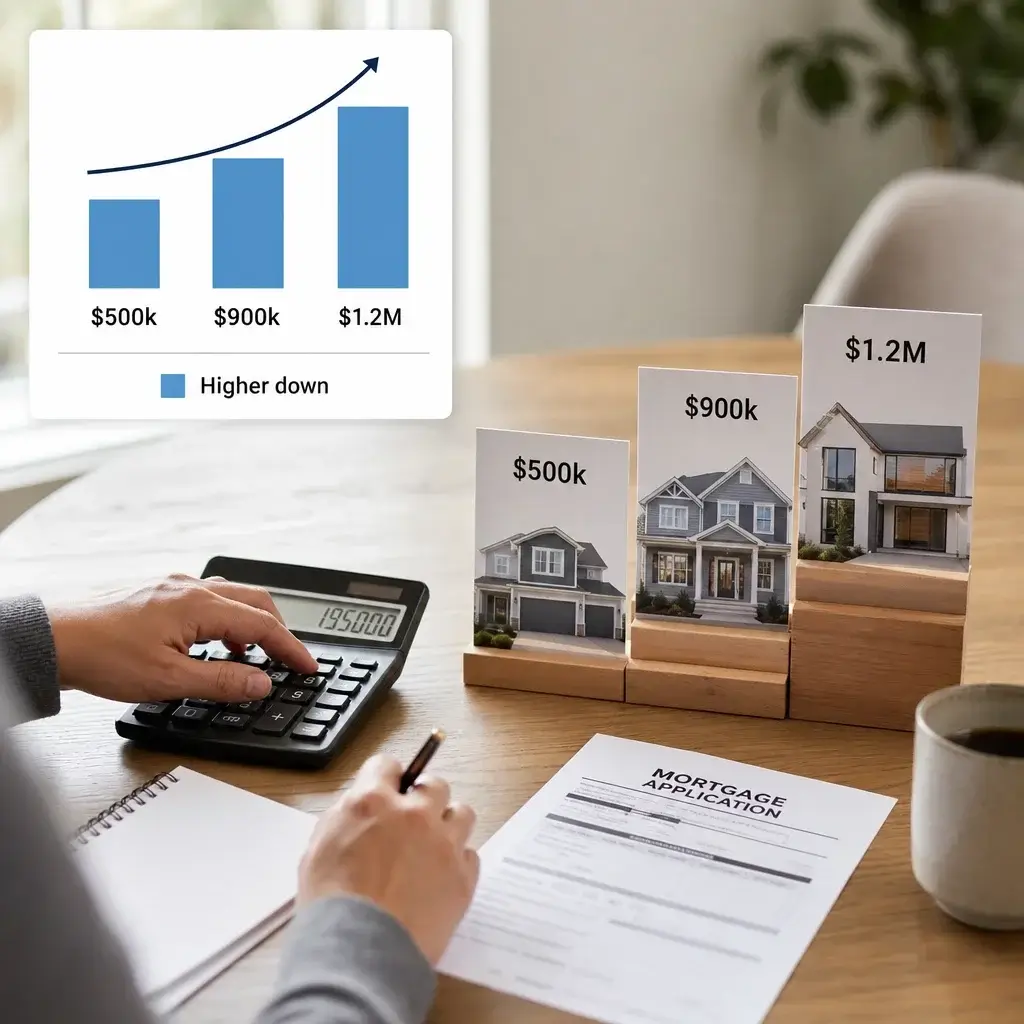
Yes, purchase price changes the answer. In Canada, lower down payment options usually depend on insured-lending price tiers and a maximum insurable purchase price ceiling, and those rules can change. If your price goes above the insurable ceiling, expect a materially larger down payment and uninsured lending options instead.
Yes, a second home down payment requirement calculator should separate three issues. It should ask whether the property is owner-occupied, what the purchase price is, and whether the property is 1 unit, 2 to 4 units, or 5 or more units. A calculator that skips those three points is usually wrong.
Yes, worked examples show why buyers get confused. On a $500,000 owner-occupied second home, a 5% assumption means $25,000 down . On a $900,000 property, the effective minimum may rise because higher price tiers often require a higher percentage on part of the price. On a $1,200,000 purchase, many buyers are into uninsured territory and should expect a much larger cash requirement, often at least 20% or more depending on the file .
Does property type change the down payment requirement?
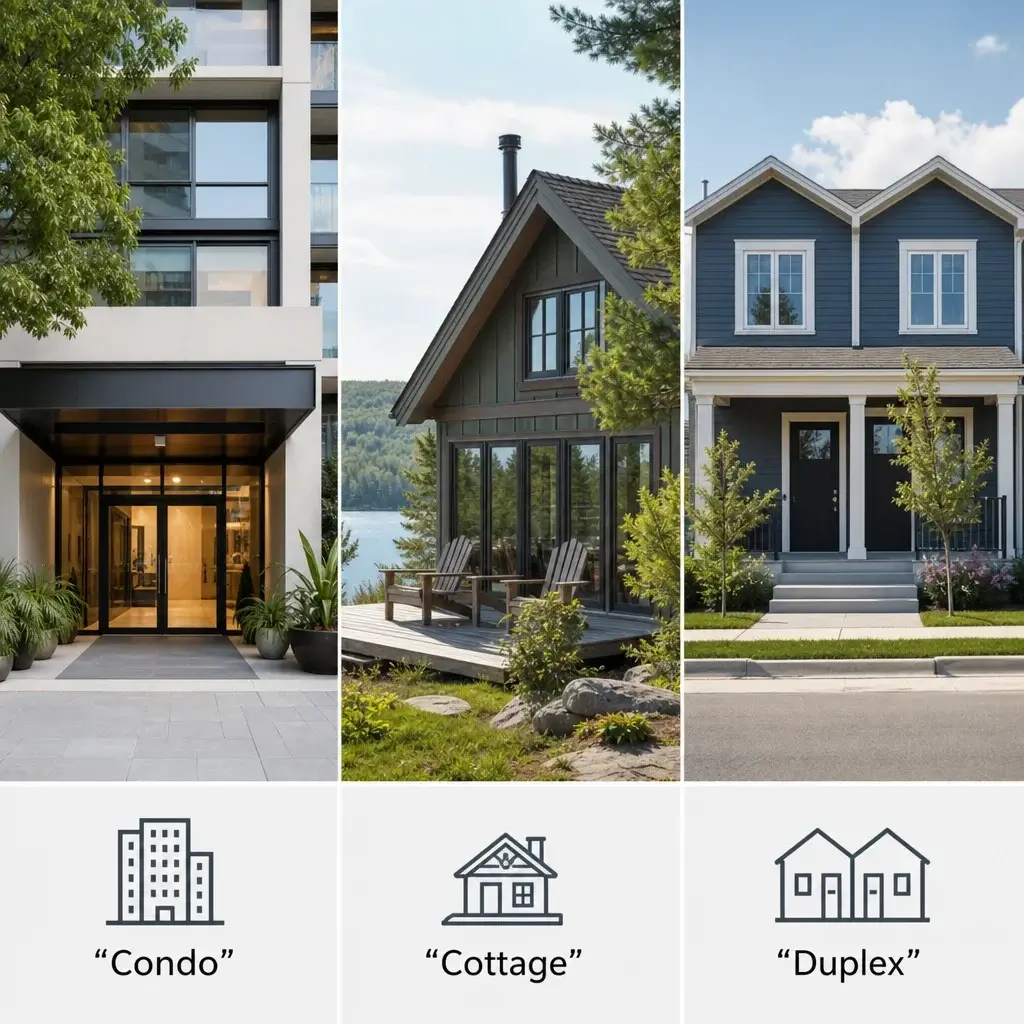
Yes, property type matters, but use usually matters more. A condo, cottage, duplex, or seasonal property can all qualify differently because lenders care about occupancy, marketability, and how easy the property would be to resell.
Yes, condos have an extra legal due diligence step in Ontario. We review the status certificate, which is the condo corporation’s financial and legal snapshot. That does not set the lender’s minimum down payment, but it can affect whether the deal should close at all.
Yes, cottages and seasonal properties are often where financing gets tighter. A lender may want proof of year-round access, permanent heat, potable water, and normal insurance availability. I have seen cottage buyers approved in principle, then forced to scramble when the appraisal flagged seasonal use.
Yes, duplexes, triplexes, and fourplexes sit in the grey zone. If you occupy one unit, some lenders will consider projected rental income, but not always dollar-for-dollar. If you occupy none of the units, the property is usually treated as a rental or investment purchase.
Mortgage insurance, stress test, GDS/TDS, and approval basics
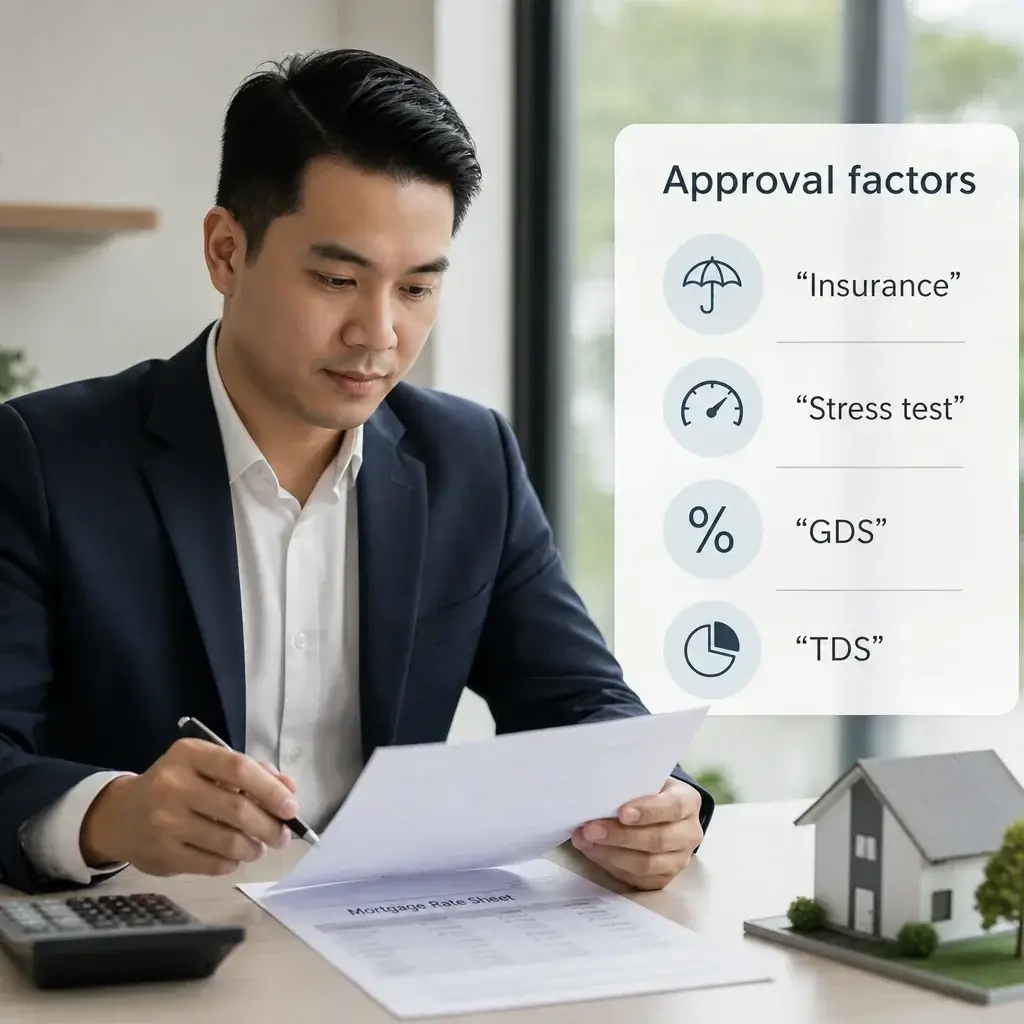
Yes, mortgage default insurance may apply when the down payment is below 20%. In Canada that insurance is commonly provided through CMHC or private insurers such as Sagen and Canada Guaranty, depending on the file. The premium is usually added to the mortgage rather than paid fully in cash on closing, but the exact treatment depends on the product and lender.
Yes, lower down payment usually means a mortgage insurance premium. Premium bands often rise as the loan-to-value ratio rises, and that can add thousands to the total borrowing cost over time. Buyers focus on getting in with 5%, then forget they are financing a premium too.
Yes, debt ratios still decide whether the deal gets approved. Lenders commonly look at GDS and TDS, and a TDS ceiling around 44% is a common benchmark, though lender variance is real . Existing mortgage payments, taxes, heat, condo fees, car loans, lines of credit, and credit cards all cut borrowing room.
Yes, the stress test matters on a second-home mortgage. Borrowers usually need to qualify at the contract rate plus a buffer or the current benchmark, whichever rule applies at that time. That is why buyers who can carry the payment in real life still get declined on paper.
Can you use a HELOC, refinance, savings, gifts, or borrowed funds for the down payment?

Yes, you can often use equity from your current home as the down payment on a second home. The two usual tools are a HELOC, which is a home equity line of credit, and a refinance, which replaces your current mortgage with a larger one and pulls cash out. Both increase your debt load, so approval still turns on the ratios.
Yes, a HELOC can help fund a second home down payment, but it is not free money. HELOC borrowing is revolving debt, usually at a variable rate, and lenders count that payment when they test your file. The exact amount available depends on current loan-to-value limits, your existing mortgage balance, and the lender’s product rules.
Yes, a refinance can also fund the down payment. Refinance files often take about 2 to 4 weeks from instruction to closing if the title is clean and the lender moves promptly . They take longer if you are switching lenders, discharging old debt, or fixing title issues.
Yes, borrowed down payment funds may be allowed in some scenarios, but only if fully disclosed and accepted by the lender. Undisclosed borrowed funds are where people get themselves in trouble. I tell clients not to move money around at the last minute without clearing it with the mortgage side first.
Yes, gift funds can work in some files. The lender will usually want a gift letter and proof the money was actually received before closing. If the lender or insurer does not accept the source, we cannot fix that at the lawyer’s desk the day before closing.
Ontario closing costs on a second home purchase
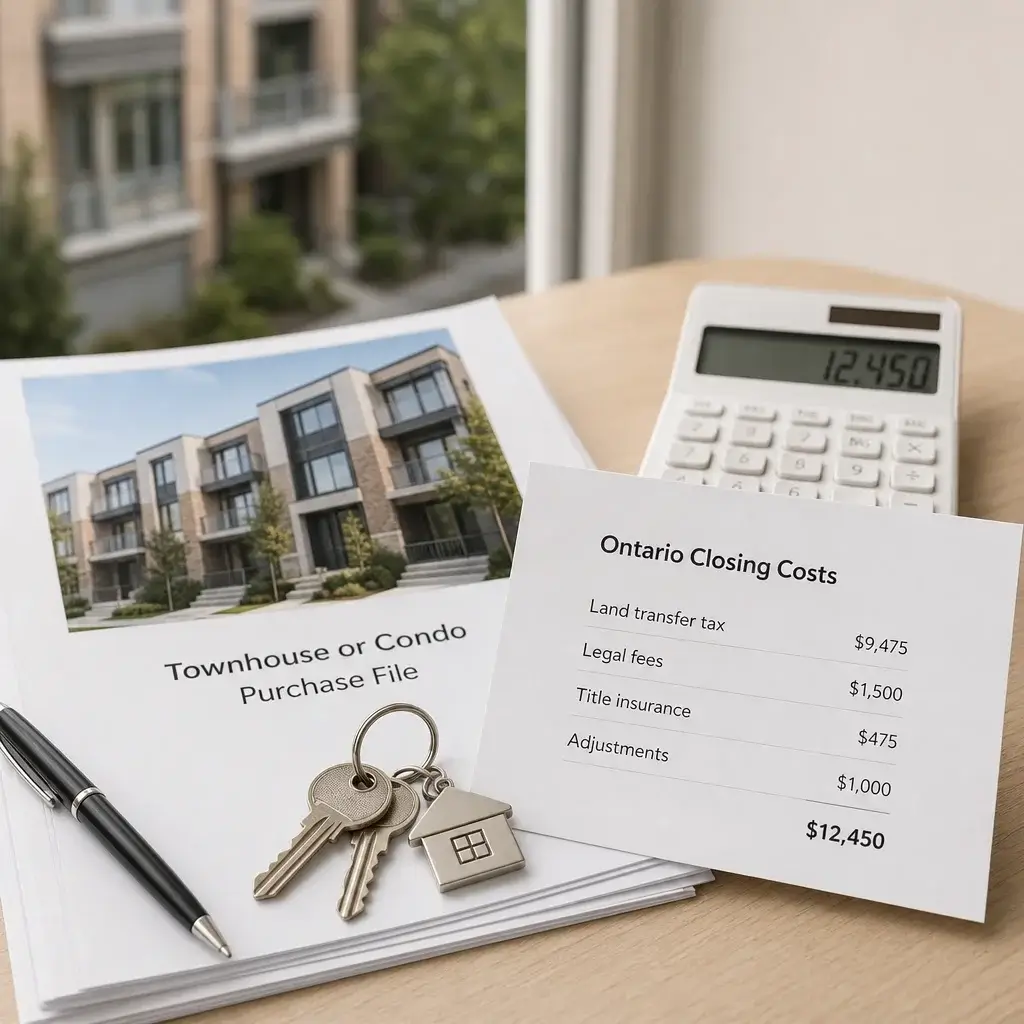
Yes, closing costs on a second home in Ontario are on top of the down payment. I tell clients to budget roughly 1.5% to 4% of the purchase price all-in, with land transfer tax usually being the biggest line item outside Toronto and Toronto municipal land transfer tax adding another major hit inside the city . The exact cost depends on price, location, lender instructions, and adjustments.
Yes, Ontario land transfer tax is a real cash cost on closing. If the property is in Toronto, there is usually a second municipal land transfer tax on top of the provincial one. Buyers who budget only for the mortgage down payment are usually short.
Yes, legal fees and disbursements are part of the total. Disbursements are third-party costs we pay to close the file, such as registrations, searches, bank wires, and title insurance setup. The exact cost depends on the lender and the file, not just the purchase price.
Yes, title insurance is commonly required by lenders and is standard on most residential purchases. It is a one-time policy that can cover certain title defects, fraud risks, and survey-related issues, subject to the policy terms. It does not replace legal review, but it catches problems that can be expensive later.
Yes, adjustments can surprise buyers. Adjustments are amounts the seller prepaid or used before closing and the buyer reimburses on closing, such as property tax, fuel oil, condo fees, or rent credits. I have seen builder and occupancy adjustments on new builds blow a buyer’s budget by thousands.
| Closing cost item | Typical treatment |
|---|---|
| Ontario land transfer tax | Pay on closing |
| Toronto municipal land transfer tax | Extra cost if property is in Toronto |
| Legal fees and disbursements | Pay on closing |
| Title insurance | Commonly arranged at closing |
| Appraisal / lender fees | Sometimes paid before or at closing |
| Home inspection | Usually paid during due diligence |
| Adjustments | Vary by the specific deal |
Worked examples: how much cash do you need for a second home?
Yes, the best way to estimate how much total savings you need for a second home including closing costs is to separate down payment from closing costs. These examples are illustrative only and assume no unusual adjustments. Lender and insurer rules can change.
Yes, Example 1 is a $600,000 owner-occupied second condo in Ontario. If a 5% minimum is available, the down payment is about $30,000 . If closing costs run roughly 1.5% to 4%, add about $9,000 to $24,000 . That puts estimated cash needed around $39,000 to $54,000 plus any deposit top-up or adjustments .
Yes, Example 2 is an $850,000 cottage for personal use. If the file fits owner-occupied second-home rules, the minimum may be lower than 20%, but the exact figure depends on current lender policy, insurability, and the cottage’s year-round features. Using the same 1.5% to 4% closing-cost range, budget about $12,750 to $34,000 for closing costs alone .
Yes, Example 3 is a $1,100,000 rental duplex in Ontario. A 20% assumption means about $220,000 down . Closing costs at roughly 1.5% to 4% add about $16,500 to $44,000 . That puts total cash needed around $236,500 to $264,000 before adjustments .
| Example | Purchase price | Down payment assumption | Estimated closing costs | Estimated total cash needed |
|---|---|---|---|---|
| Owner-occupied second condo | $600,000 | $30,000 at 5% | $9,000-$24,000 | $39,000-$54,000 |
| Personal-use cottage | $850,000 | Depends on current eligibility | $12,750-$34,000 | Down payment + closing costs |
| Rental duplex | $1,100,000 | $220,000 at 20% | $16,500-$44,000 | $236,500-$264,000 |
Can you use RRSP funds or first-time buyer programs for a second home?
No, a second property does not automatically qualify you for first-time buyer benefits. Program eligibility turns on the specific rules for that program and your ownership history, not the everyday label you give the purchase.
Yes, RRSP funds may be available through the Home Buyers’ Plan in some cases, but not just because you are buying what you call a second home. The rules depend on whether you meet the current first-time home buyer test or another qualifying condition under the program at that time. This is where I tell clients to confirm both mortgage and tax advice before relying on it.
Yes, Ontario and Toronto first-time buyer land transfer tax rebates have their own eligibility rules. If you already own or recently owned a home, that can change the answer. Get current advice before you assume any rebate is available.
Common questions buyers ask before closing on a second home
Yes, you may be able to put 5% down on a second home in Canada if it is a true owner-occupied second home and the purchase fits current insured-lending rules . No, that does not mean every second property qualifies. Rental use, higher price, unit count, and lender overlays can push the requirement up fast.
Yes, you usually have to put 20% down on a non-owner-occupied rental property, and that is the safer assumption for planning purposes . Some files need more, especially where the property is harder to finance or falls into commercial lending.
No, there is no single income you need for a $1,000,000 mortgage in Canada. A rough planning range can easily land around $180,000 to $260,000 household income in some conventional scenarios, but rate, amortization, taxes, condo fees, heating, existing debt, and the stress test can move that materially .
Yes, the 20/30/40 rule is just a budgeting shortcut, not law and not a lending rule. Online versions vary, but they usually try to cap housing, debt, and savings targets into simple buckets. I would not use a rule of thumb to decide whether a second-home purchase is affordable.
Yes, a 46 year old can get a 25 year mortgage if they otherwise qualify. Lenders care about income, debt, credit, and the property more than the borrower’s age alone. Product policy can differ, but 46 is not the issue.
When to speak with a real estate lawyer before you waive conditions
Yes, some second-home deals need legal review before the offer goes firm. I am talking about cottages, seasonal properties, co-ownership, title transfers tied to family planning, private mortgages, unusual occupancy plans, and multi-unit purchases with rental income assumptions. Those are the files that get expensive when nobody asks the hard questions early.
Yes, a real estate lawyer in Toronto or anywhere in Ontario can help before closing even though the lender decides mortgage approval. We review title, explain closing costs, check the agreement terms, flag requisition issues, coordinate mortgage instructions, and register the transfer. The legal side will not lower your down payment requirement, but it can stop a bad deal from getting worse.
Yes, if you are buying a second home, condo, cottage, or rental property in Ontario, get a closing-cost quote and have the agreement reviewed before you waive conditions. That is the practical next step. It is cheaper than finding out three days before closing that the occupancy plan, title, or cash-to-close number never worked.