
Most buyers and owners think a right of first refusal means the holder can force a sale whenever they want. They are wrong. In first refusal real estate, the holder usually gets the chance to match a sale opportunity before the owner sells to someone else, but only if the contract says the right has been triggered.
What a right of first refusal means in real estate
A right of first refusal is a contractual right that gives one party the chance to buy property before the owner sells it to a third party. In plain English, a first refusal clause real estate deal gives the holder a first shot, not automatic ownership. The exact effect turns on the wording of the agreement, the trigger, the notice rules, and the response deadline.
A first right of refusal clause real estate arrangement usually involves three players. The owner holds title. The holder has the ROFR. The third-party buyer makes the outside offer or becomes the benchmark deal the holder may need to match.
No, a ROFR does not usually force the owner to sell from day one. It usually matters only when the owner decides to sell, or receives a bona fide offer, if that is how the clause is written. That is why the first right of refusal in a contract is less control than an option to purchase real estate, which can give the holder a present right to buy on set terms.
How a right of first refusal works step by step
A right of first refusal real estate contract usually works in five steps. First, the clause is signed. Second, a trigger happens. Third, the owner gives notice. Fourth, the holder either exercises, waives, or misses the deadline. Fifth, the sale proceeds with the holder or the outside buyer.
Yes, the response window is often short. In practice, exercise periods in drafted clauses commonly range from about 5 business days to 30 days, though commercial deals and bespoke family arrangements can run longer, sometimes up to 60 to 90 days . If the holder misses the deadline, I tell clients to assume the right is lost for that transaction unless the clause clearly says otherwise.
The notice package should state the price, key business terms, closing date, conditions, and the deadline to respond. Some clauses require a copy of the third-party offer. Others require only a summary of the material terms. That detail matters because fights start when one side says the notice was incomplete.
The holder usually has to comply strictly with the contract to exercise the right. That often means written notice by the exact method required, plus a signed acceptance or matching agreement, and sometimes a deposit if the clause or follow-on agreement requires one. I have seen deals fail because someone emailed notice when the clause required personal delivery or courier.
A clean exercise checklist is simple. The owner reviews the trigger, prepares the notice, and sends it the approved way. The holder calendars the deadline, lines up financing and due diligence, and delivers a clear exercise or waiver before time expires. The lawyers then paper the next agreement and close the transfer if the deal proceeds.
When a ROFR is triggered and what counts as a valid offer
A ROFR gets triggered only when the contract says it gets triggered. The two common models are an owner’s decision to sell, or receipt of a bona fide third-party offer. If the clause is vague on the trigger, the dispute starts there.
A bona fide offer usually means a real offer made in good faith by a genuine outside buyer on terms the seller is prepared to accept. It does not automatically include every expression of interest, every letter of intent, or every related-party paper transaction. The wording has to address those situations if the parties want certainty.
No, not every transfer triggers a property first right of refusal. Gifts, family transfers, estate distributions, corporate reorganizations, refinances, and transfers to related entities may be excluded or included depending on the clause. In Ontario, I tell clients to draft those exceptions expressly because courts do not fix bad drafting for free.
Yes, changing material terms can retrigger notice obligations. If the seller first offers the holder a deal at one price and later accepts a lower price, longer closing, or lighter conditions from a third party, the holder may argue they deserved another chance. Good clauses say whether a price drop, package change, or failed third-party deal resets the process.
ROFR vs ROFO vs option to purchase: which gives more control?
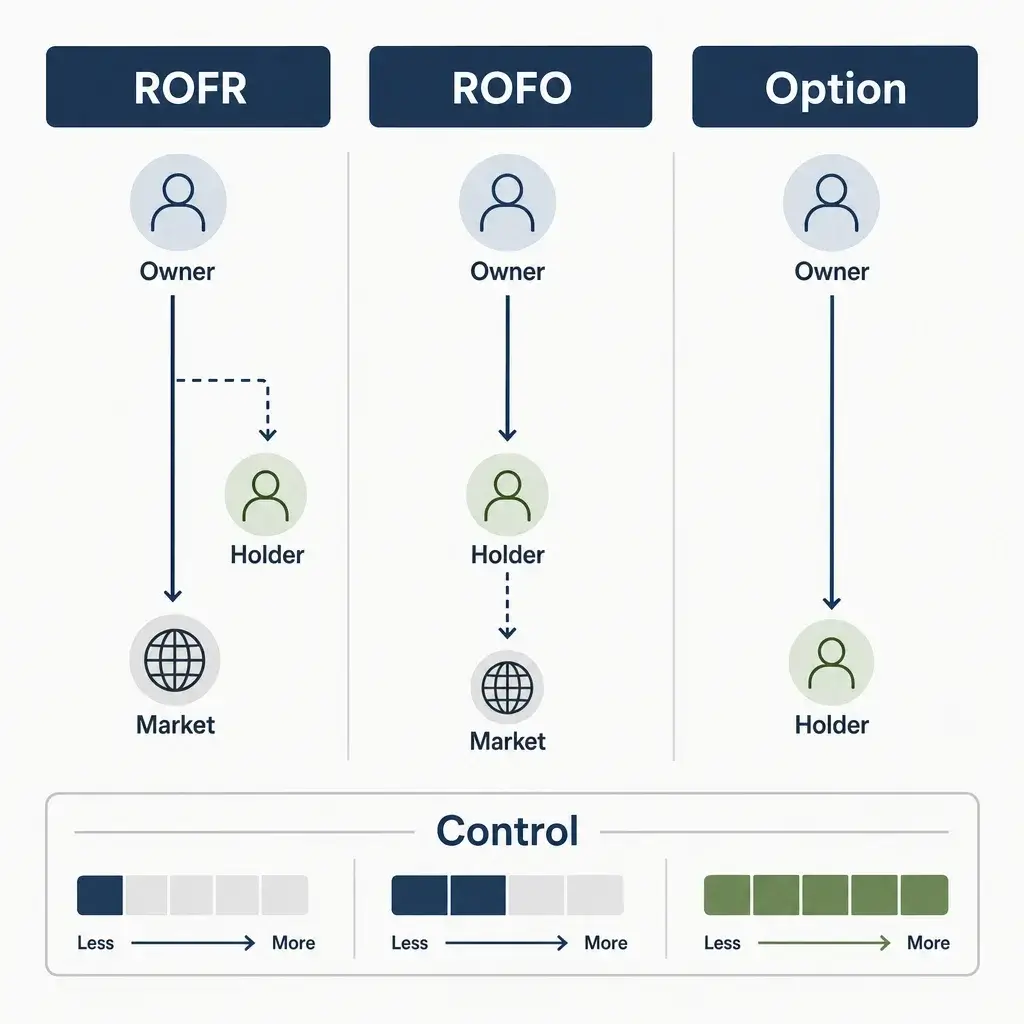
The short answer is this: an ROFO gives the seller more control than a ROFR, and an option to purchase gives the holder more control than both. A right of first offer, or ROFO, usually requires the owner to offer the property to the holder first before shopping it widely. A ROFR usually lets the owner test the market first. An option lets the holder compel a sale if the option terms are met.
| Right | Who controls timing? | Who sets price first? | Need third-party offer? | Usual leverage result |
|---|---|---|---|---|
| ROFR | Owner usually controls timing | Market or third-party offer often sets benchmark | Usually yes, unless trigger is owner’s decision to sell | Usually more holder protection |
| ROFO | Owner usually controls timing | Owner usually starts with its offer | No | Usually more seller control |
| Option to purchase | Holder can control timing during option period | Price or formula is set in advance | No | Usually strongest holder control |
| First option real estate wording | Often used loosely, but may mean an option or a priority negotiation right depending on drafting | Depends on wording | Depends on wording | Must be defined carefully |
A ROFO and ROFR are not the same. In a right of first offer, the owner must come to the holder first. In a right of first refusal, the holder usually reacts to a sale opportunity the owner has already generated. Sellers often prefer ROFO because it can preserve more negotiating freedom and reduce the chilling effect on outside buyers.
No, a first option real estate clause is not automatically the same as a ROFR. Some people use first option loosely, but an option to purchase real estate is usually a stronger, stand-alone right to buy on preset terms. If the clause says the holder may purchase during a defined period at a fixed price or a formula price, that is closer to an option than a first right of refusal to purchase property.
Residential, lease, family, and investor examples

A tenant ROFR in a lease is common and can work well if drafted tightly. A landlord may agree that if the rental property is going to be sold during the lease term, the tenant gets 10 to 15 business days to match the offered price and terms . The dispute usually comes later, when the notice is thin or the tenant says the final buyer got better terms.
A co-owner ROFR is common in investment property. Two investors buy a duplex or small commercial building, and one wants an exit path without forcing a fire sale. The co-ownership agreement gives the other investor the first right to purchase property before an outside buyer comes in. The pressure point is usually valuation, especially if the outside deal includes vendor financing, holdbacks, or non-cash consideration.
A family succession ROFR is common when parents want one child or sibling group to have the first chance to keep a cottage, farm-adjacent parcel, or income property. The problem is not the idea. The problem is vague drafting around gifts, estate transfers, below-market sales, and timing after death or incapacity.
I have also seen a commercial lease use a right of first refusal clause in real estate as a compromise. The tenant wants a path to buy later, but the landlord will not grant a full option. That can work, but only if the lease says exactly what happens on notice, due diligence, deposits, title review, and closing. Commercial fights are usually bigger because the clause sits beside assignment rights, rent defaults, and redevelopment plans.
Advantages and disadvantages of giving or getting a ROFR
Yes, a ROFR can be useful. For the holder, it creates a real chance to buy before outsiders do. For the owner, it can help settle expectations with a tenant, family member, co-owner, or strategic investor. Used well, it buys order.
No, a ROFR is not automatically good. For holders, the downside is speed and uncertainty. They may need to line up financing, an appraisal, inspections, and a deposit in as little as 5 to 15 business days in a tight clause . I have seen that kill a purchase twice in one year.
No, a ROFR is not automatically good for sellers either. It can reduce marketability because outside buyers may not want to spend time and money negotiating if someone else can match. That chilling effect is hard to quantify, but it is real in both residential and commercial files.
The worst ROFRs are vague ones. If the clause does not define trigger events, notice, matching terms, deadlines, and what happens if the outside deal changes, the right becomes a litigation seed. I tell clients the paper is cheap compared with the fight.
How much is a right of first refusal worth?
There is no standard price for a ROFR. Its value depends on the property, the market, the duration, the trigger, the matching rules, the financing environment, and how much the clause limits the owner’s freedom to sell. That is why a property first right of refusal may be commercially significant without having a clean dollar value on day one.
For the holder, the value is opportunity value. They gain a preferred position if the property comes to market. For the owner, the cost is reduced flexibility and sometimes lower market enthusiasm. In higher-value commercial files, lawyers and appraisers may both need to review the clause if the parties are negotiating compensation or buyout value.
What to include in a strong right of first refusal clause

A strong ROFR clause needs a full checklist, not a slogan. It should identify the parties, the property, the trigger, the notice method, what the notice must include, the response deadline, the exercise method, any deposit rules, the matching standard, the closing date, permitted conditions, expiry, assignment rights, transfer exceptions, remedies, waiver language, and whether a failed third-party deal retriggers the right.
Yes, deadlines should be explicit. Response periods in real-world clauses often range from about 5 business days to 30 days for residential deals and from 10 days to 90 days for more negotiated commercial arrangements . If the clause says only “promptly” or “within a reasonable time,” someone will argue about it later.
The matching rule has to be precise. Some clauses require the holder to match all material terms. Others require only price and a few core terms. If the third-party offer includes unusual financing, an earnout, non-cash assets, a consulting agreement, or a package of properties, the holder may not know what matching actually means unless the clause deals with that problem up front.
The notice method has to be boring and exact. Email may be allowed. It may not. Courier, registered mail, personal service, and email-to-specified-addresses are all common drafting choices. The right answer is whatever the contract says, not whatever felt convenient on a Friday at 4:45 p.m.
Common drafting mistakes are easy to spot. No clear trigger. No response deadline. No definition of material terms. No rule for related-party transfers. No retrigger wording if the outside deal collapses or changes. No release process if the right is waived for one transaction but not terminated forever.
No, I do not recommend using a first right of refusal real estate template or a first right of refusal form real estate document you found online without review. Lease-based ROFRs, family transfer clauses, and investment property clauses need different wording. A template that ignores title issues, package sales, or financing terms can create a bigger problem than having no clause at all.
What happens after the holder exercises the ROFR

Exercise is not the finish line. It is the handoff to the purchase agreement stage. Once the holder validly exercises, the parties usually still need to settle or sign the follow-on deal the clause requires, then satisfy conditions and close.
Yes, the holder may need to match more than price. Depending on the clause, they may need to match the deposit, closing date, conditional periods, adjustment mechanics, and any other material terms. If the third-party offer had a 30-day financing condition and a 60-day closing, the holder may have to live with both .
Due diligence rights depend on the wording. Some ROFR clauses import the exact third-party terms, which may leave the holder with no inspection or financing escape if the outside offer was firm. Others permit the holder to sign a fresh agreement with short due diligence windows, often in the range of 3 to 10 business days for inspections or financing review in negotiated clauses . That point should be settled before anyone signs.
Yes, changes after waiver or exercise can restart the right. If the holder waived a deal at one price and the seller later cuts the price or sweetens the terms, the clause may require a new notice. If the holder exercised but the follow-on agreement dies, the clause should say whether the ROFR is spent, suspended, or revived.
Can a ROFR be waived, released, amended, or terminated?
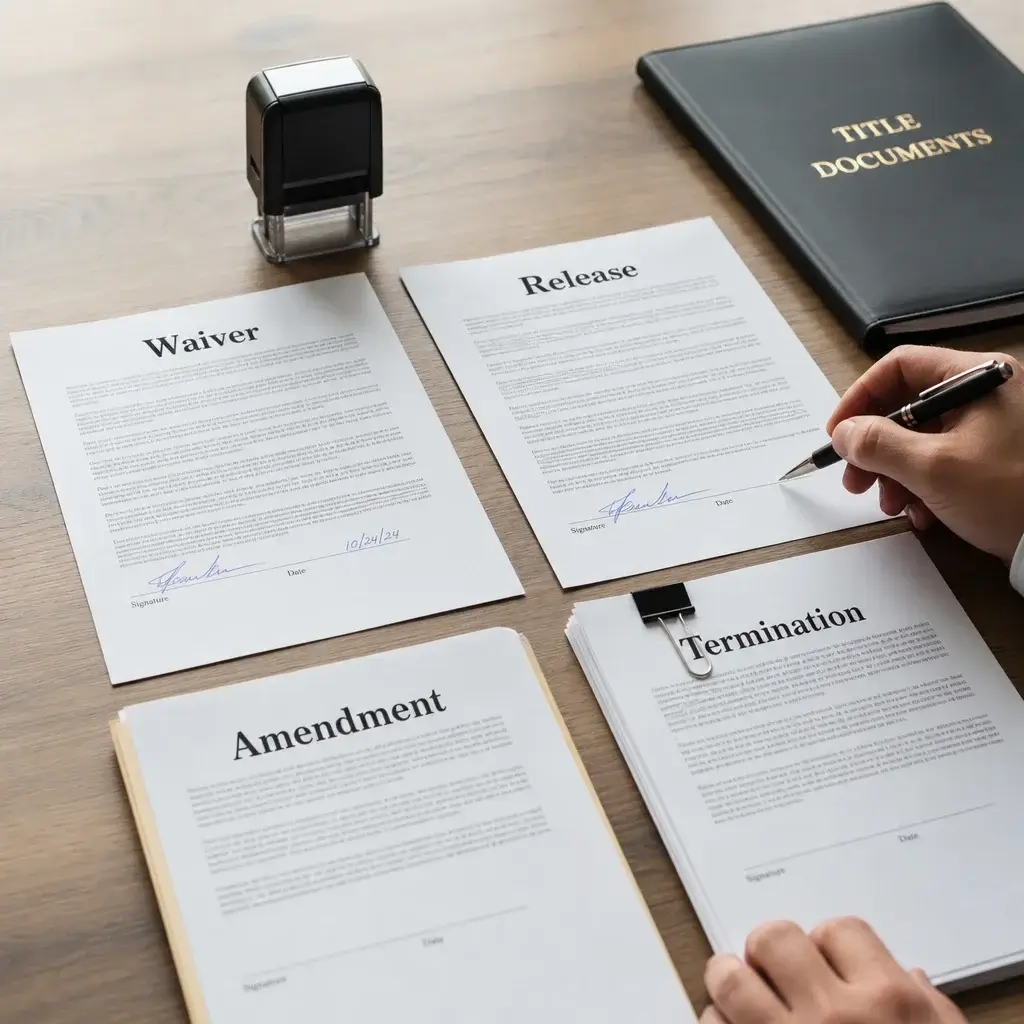
Yes, a ROFR can usually be waived, amended, released, or terminated if the contract and the parties allow it. The key is to document the change in writing. Oral side deals create ugly evidence problems.
A one-time waiver is not the same as full termination. A waiver may let the owner complete one transaction without wiping out the right forever. A termination or release usually ends the right completely. The document should say which one it is.
Yes, title steps may matter. If the right has been registered on title or protected by a notice or related instrument, the parties may also need a separate release or discharge for the land records. In Ontario, whether and how a ROFR appears against title depends on the nature of the interest and the registration route used, so I tell clients to review the parcel register before assuming the paperwork is done.
A practical exit checklist is short. Review the clause. Confirm whether a trigger has occurred. Decide if the parties want a transaction-specific waiver or full termination. Sign the amendment, release, or termination. Then update title records if anything was registered.
Is a right of first refusal enforceable in Ontario?

Yes, a right of first refusal can be enforceable in Ontario when it is clearly drafted, properly formed, and strictly exercised. No, enforceability is not automatic. The exact wording and the facts decide the fight.
The usual enforceability problems are uncertainty and non-compliance. If the clause does not clearly state the trigger, the exercise method, the matching standard, or the deadline, the court may struggle to enforce it as written. If the holder misses the notice window or fails to match the required terms, that can be fatal to the claim.
Ontario-specific caution matters here. Articles from other provinces often discuss caveats or land title practices that do not map neatly onto Ontario. I do not treat Alberta rules as Ontario rules. If title registration, notice, or an interest-in-land argument matters on your file, get Ontario-specific advice before the transaction moves.
What if the seller breaches the ROFR and sells anyway?
Yes, a seller can face serious consequences for breaching a ROFR, but the remedy depends on timing, title status, the third party’s knowledge, and the contract wording. Delay makes every remedy harder.
The first move is evidence control. Gather the signed agreement, every notice, every email, every text, and every timestamp. Then compare the actual sale terms against the ROFR clause and any waiver or exercise history. In a time-sensitive file, even a delay of days can matter if a transfer is about to register .
Possible remedies may include damages, urgent court relief to preserve the position, and in some cases orders affecting the transfer or the parties’ rights. I am being careful on purpose. Courts do not grant every remedy on every file, and once a closing happens and third-party rights intervene, the path gets narrower.
I have seen the practical cost of bad process here. One file turned on whether a later side deal changed the economics enough to retrigger the holder’s rights. Another turned on whether the holder’s exercise email complied with the notice clause. Both fights were avoidable with tighter drafting.
Special issues: package sales, co-owners, family transfers, and leases
Package sales are where weak drafting gets exposed fast. If one property subject to a first right of refusal to purchase real estate is bundled with other assets, the clause should say how price gets allocated. Without an allocation formula or valuation method, no one knows what the holder is supposed to match.
Related-party and non-cash deals are another trap. If the seller wants to transfer to a corporation they control, gift part of the value, or accept shares, vendor take-back financing, or services as consideration, the holder may argue the transaction was structured to dodge the ROFR. Good drafting either forbids that move or sets a matching formula.
Lease ROFRs need extra care because they sit beside occupancy rights and landlord-tenant obligations. Co-owner and family ROFRs need extra care because the dispute is often emotional as well as financial. Commercial and multi-asset files usually need bespoke drafting, not recycled residential wording.
When to speak with a real estate lawyer
Yes, get a lawyer involved before you sign, waive, exercise, amend, release, or dispute a ROFR. The response windows can be short, often days to a few weeks depending on the clause . That is not much time to fix vague drafting after the trigger hits.
We review the clause, the trigger, the notice, the title position, and the follow-on deal. We also look for the traps people miss: package sales, related-party transfers, financing mismatches, and waiver language that kills rights more broadly than intended. If the file is already in trouble, speed matters.
FAQ
What is a right of first refusal in real estate?
A right of first refusal is a contract right to buy property before the owner sells to someone else, usually by matching a triggered sale opportunity.
What does right of first refusal mean in simple words?
It means “give me the chance to take the deal first if you decide to sell on the terms our contract requires.”
What is the difference between ROFR and ROFO?
A ROFR usually lets the owner test the market first and then gives the holder a matching right. A ROFO requires the owner to approach the holder first before going to the market.
What is the difference between a ROFR and an option to purchase?
A ROFR is usually reactive and trigger-based. An option to purchase is usually a present right to compel a sale during the option period on preset terms.
Is a right of first refusal good or bad?
It can be either. It helps the holder, but it can restrict the seller. The result depends on the relationship, the property, and the drafting.
What are the disadvantages of a right of first refusal?
The main downsides are reduced marketability, short exercise deadlines, financing pressure, and fights over notice, matching terms, and changed deals.
How long does a right of first refusal last?
It lasts as long as the contract says it lasts. Some end on a fixed date. Some end with the lease. Some end after one triggered transaction. Some continue until written release or termination.
Can a seller accept another offer if there is a right of first refusal?
Yes, often as a conditional step in the process, but the seller usually must first comply with the ROFR notice and exercise procedure if the clause has been triggered.
What happens if the holder does not respond to a ROFR notice?
In many clauses, the holder is treated as having waived that transaction once the response deadline passes. Strict wording matters.
Can a right of first refusal be included in a lease?
Yes. Tenant purchase rights in leases are common, but the lease must say clearly how notice, exercise, and the later purchase agreement work.
Can a right of first refusal be terminated or waived?
Yes. The parties can often waive one transaction, amend the clause, or terminate it entirely by written agreement. Title clean-up may also be needed if anything was registered.
What happens if a seller breaches a right of first refusal?
The holder may have a claim for damages or urgent court relief, depending on the wording, timing, and status of the transfer. Fast legal review matters.
If you are being asked to sign or respond to a first right of refusal clause in real estate, do the unglamorous step first: pull the exact clause, the notice, and the title records together before anyone negotiates by memory.